
The Controlled Panel
Milestones that the IPCC was built on and how its very design now lets its enemies slow it down. The tool isn't broken: It's working exactly as intended.

The World That Made the IPCC (1985–1988)
Our story starts with a man whose father was obsessed with the weather.
Bert Bolin was born in 1925 in Nyköping, a small town south of Stockholm. Both his parents were schoolteachers. His father, Richard, watched the sky the way other men watched the stock market. In 1942, Richard took his teenage son to the headquarters of the Swedish Meteorological and Hydrological Institute and introduced him to the deputy director, Dr. Anders Ångström, to discuss the young man’s prospects. The following year, Bolin began studying mathematics and physics at the University of Uppsala.
At 25, he crossed the Atlantic to work with Jule Charney and John von Neumann at the Institute for Advanced Study in Princeton, using ENIAC - the world’s first electronic computer - on the first computerized weather forecast. He learned that massive international scientific coordination was possible, even in the early Cold War.
In 1957, his mentor Carl-Gustaf Rossby suddenly died, a towering figure in modern meteorology. Bolin, still in his early thirties, inherited Rossby’s institute, his visionary interest in CO₂, and his rich network of international contacts. He became a serial institution-builder: first chair of the ICSU Committee on Atmospheric Sciences, first chair of the Global Atmospheric Research Programme. He was that person you would ask to build an international scientific body from nothing.
Villach
In October 1985, three UN bodies convened a conference in Villach, Austria. Experts from 29 nations gathered to review the evidence on greenhouse gases. The historian Spencer Weart calls it a “historic turning point.” Jill Jäger, who edited the conference report, says simply: “Villach was the turning point.” What made Villach different was the science. And the man who organized the science was Bert Bolin.
His analyses showed something new: it wasn’t just carbon dioxide warming the planet. Methane, nitrous oxide, and Chlorofluorocarbons (CFCs) were greenhouse gases too. This “had a big impact on the participants,” recalls James P. Bruce, the WMO’s Deputy Secretary-General, “because it was bringing the likely time of significant changes in climate much closer than had been previously expected.”In the first half of the next century
a rise of global mean temperature could occur
which is greater than any in man’s history.
Bolin wrote the 500-page report. His warning: “in the first half of the next century a rise of global mean temperature could occur which is greater than any in man’s history.” Governments built dams and dikes, managed farms and forests, “under the assumption that the climate would be the same in the future as in the past.” That assumption was now dead. The group even “diffidently suggested” a global convention on climate.
The press took no notice. But Bolin and Mostafa Tolba — the Egyptian biologist who directed the United Nations Environment Programme UNEP — made sure the Villach recommendations reached the international scientific leadership. This was the first time climate science, as a community, had stepped out of the laboratory and into the political arena.
Villach produced a practical result. In 1986, UNEP, WMO, and ICSU established the Advisory Group on Greenhouse Gases (AGGG), a small, elite committee. Bolin was among them.
In 1987, about two dozen scientists and policy experts met in Bellagio, Italy. They proposed the world should not warm faster than 0.1°C per decade, or more than 2°C above the pre-industrial level. The number that would haunt climate diplomacy for decades first appeared here. But the AGGG was small, self-appointed, and not answerable to governments. That would become its undoing.
The Vocabulary Forming a Blueprint
Two months before the Villach recommendations had even begun to circulate, something remarkable happened in Montreal. In September 1987, two dozen nations signed the Montreal Protocol on Substances that Deplete the Ozone Layer, the most successful environmental treaty in history.
The driving force was Mostafa Tolba, who had spent years pushing governments to act on CFCs. It happened against the political grain. Ronald Reagan overruled his own Cabinet to support the treaty. His Secretary of State, George Shultz, blocked efforts by the Interior Department and the OMB to weaken the agreement. Reagan called it “a model of cooperation.”
Tolba had shown that international environmental treaties could work, even with uncertainty, even with industry opposition, even with conservative governments. As he later reflected: “the Montreal Protocol was the first truly global environmental treaty, and moreover it dealt with an issue still shrouded in scientific uncertainties, one that posed a threat, not immediately, but in the future.”
In October 1987, the World Commission on Environment and Development, chaired by Norwegian Prime Minister Gro Harlem Brundtland, published Our Common Future, sometimes referred to as “The Brundtland Report”. Its gift to the world was a single sentence: “Sustainable development is development that meets the needs of the present without compromising the ability of future generations to meet their own needs.” The framing told developing countries they wouldn’t be asked to stay poor, and industrialized countries they couldn’t keep polluting. It directly led to the decision to hold the 1992 Earth Summit.
The Hole in the Sky
a short intermission of an environmental success story: the fight against the hole in Earth’s ozone layer
In 1973, a chemist at UC Irvine named F. Sherwood Rowland worked out that CFCs - the inert chemicals in refrigerators, foam insulation and spray cans - eventually drift into the stratosphere, where UV radiation splits them and releases chlorine atoms that destroy ozone in a chain reaction. He published the finding in Nature in 1974. The industry called it science fiction first, but in 1985 a British team in Antarctica measured stratospheric ozone levels 40% below what they had been in the 1960s - a seasonal depletion so severe it became known as the ozone hole, that was far from fiction. Rowland shared the 1995 Nobel Prize in Chemistry for it.
A human made chemical was provably destroying stratospheric ozone. Without that layer of those oxygen based molecules, ultraviolet radiation reaches the surface causing higher rates of skin cancer, cataracts, and crop damage. NASA satellites had been recording the data but their software had been rejecting the numbers as out of range: the hole was real and it was growing.
What followed is the closest thing the environmental movement has to a success story. In 1985, 28 nations signed the Vienna Convention, a framework agreement with no binding limits - just a commitment to study the problem. Two years later, in September 1987, 24 nations signed the Montreal Protocol, which required a 50% cut in CFC production by 1999. The chemical industry, led by DuPont, initially fought regulation. Then, as the scientific case hardened, it pivoted: DuPont announced a phaseout in 1988, having already developed substitutes. The treaty was strengthened repeatedly: London in 1990, Copenhagen in 1992, Beijing in 1999. Production of CFCs in developed countries ended by 1996, merely 10 years after internationally confirming a planetary life threatening environmental problem. The ozone layer is now projected to recover to 1980 levels by mid-century.
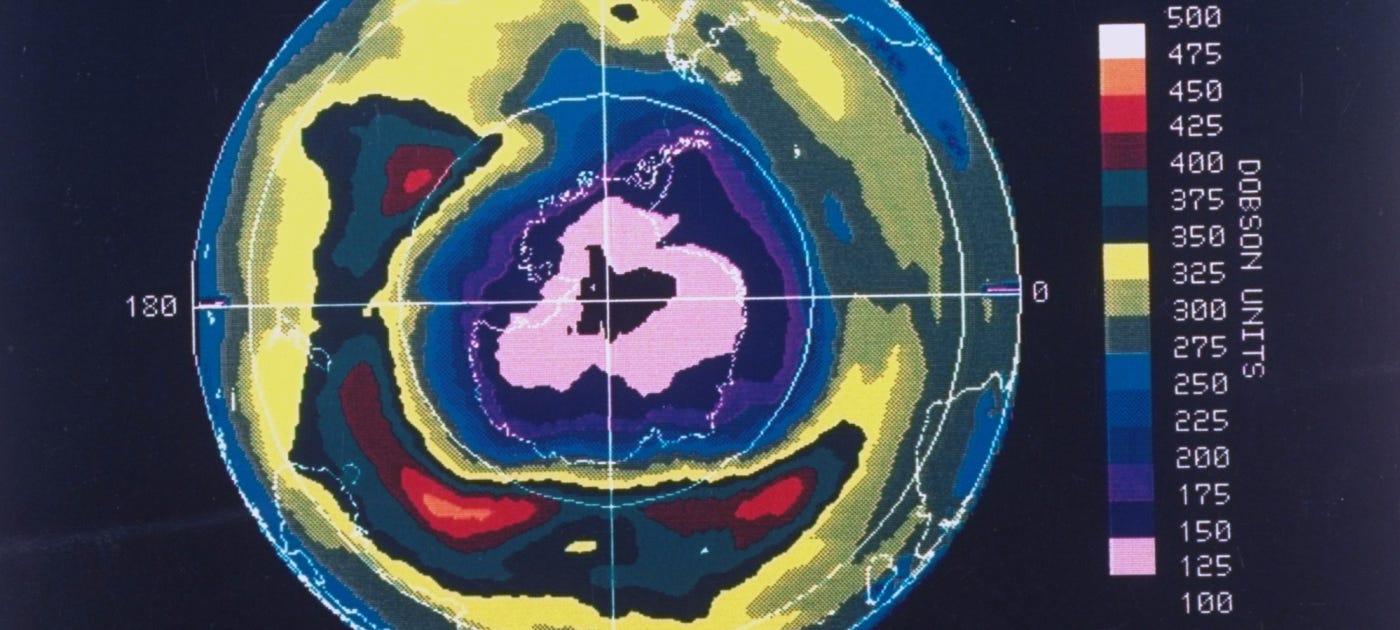
The Montreal Protocol is the template everyone points to. It worked because the science was clear enough, the industry alternative existed, and its diplomatic architecture was designed to start modestly and ratchet up.
The Heat Wave
The summer of 1988 was brutally hot in the United States. A drought covered half the country. Yellowstone burned. The Mississippi was so low barges couldn’t pass.
On June 23, 1988, Dr. James Hansen, director of NASA’s Goddard Institute for Space Studies, testified before the Senate. The hearing was organized by Senator Tim Wirth of Colorado. As the Washington Post later reported, Wirth chose a particularly hot day and left the hearing room windows open the night before “for a bit of stage effect.”
Hansen’s testimony was blunt. “The earth is warmer in 1988 than at any time in the history of instrumental measurements. […] The global warming is now large enough that we can ascribe with a high degree of confidence a cause and effect relationship to the greenhouse effect. […] In my opinion, the greenhouse effect has been detected, and it is changing our climate now.” The New York Times reported it on the front page: Global Warming Has Begun, Expert Tells Senate.
Days later, more than 300 scientists and policymakers from 48 countries gathered in Toronto for the World Conference on the Changing Atmosphere. It proposed a 20 percent reduction in CO₂ emissions below 1988 levels by 2005. It called for an “international framework convention.”
The United States sent only a mid-level government representative. William Nitze, then Deputy Assistant Secretary of State, argued that it “would be premature at the current moment to contemplate an international agreement that sets targets for greenhouse gases.” Other countries sent prime ministers and presidents.
Hansen’s testimony, the Toronto declaration, the heat wave, the ozone success, together they created a wave of political momentum. The IPCC was forced into existence by that wave. And Bolin , the quiet Swede who had spent three decades building the networks that made it possible, was the man everyone would turn to.
The Design Choice (1988)
Here is the paradox at the heart of the IPCC’s origin story. The received narrative is that the IPCC was a liberal, UN-driven creation. The historical record says something more interesting: The IPCC’s principal architect was the conservative Reagan administration. To understand how that happened, we have to understand the man who wanted the IPCC to be something else entirely.
Mostafa Tolba was an Egyptian scientist with a PhD from Imperial College London, over 100 peer-reviewed papers, and a stint as Egypt’s Minister of Science. He ran UNEP for 17 years. Tolba wanted to replicate his ozone success for climate. He wanted a far-reaching climate treaty, built the same way the ozone treaty was built - swift, binding, driven by UNEP. After Villach, he pushed for an independent group of scientists to monitor the climate, a body that would be self-appointed and answerable to no government.
The United States government was alarmed. The Department of Energy rejected the Villach report because “it was not prepared by government officials.” As Jill Jäger recalls: “The US government became alarmed that the climate agenda was being driven by a small group of non-governmental entities.”
The US had multiple motivations: distrust of the AGGG as too activist, distrust of Tolba’s ambitions for a swift climate treaty driven by UNEP, and a desire for control. As political scientist Shardul Agrawala documented, one likely US motivation “was to acquire a stronger degree of control of the process, specifically with regard to potential decisions on governmental action to abate climate change.”
The compromise: the US recommended that “an intergovernmental mechanism” be set up to conduct scientific assessment. The key word is intergovernmental. Unlike the AGGG, the IPCC would be a body of governments, not individual scientists. Its members would participate as official representatives of their states.
The IPCC was formally established in 1988 and endorsed by UN General Assembly Resolution 43/53 of December 6, 1988. As the AIP’s history bluntly notes: “contrary to widespread assumptions, the IPCC was not an organ of the United Nations (which only provided administration) nor was it the creation of liberals. While formally a creation of UNEP and WMO, in practice the IPCC operated as an independent body, answering not to the UN but to delegates appointed by national governments. Its principal architect was the conservative Reagan administration.”
Tolba’s dream of a rapid climate convention was deferred. The IPCC would assess, not negotiate. The purpose of the IPCC was to put scientists back in the cages they had briefly escaped from at Villach. Tolba gave the opening speech at the IPCC’s first meeting on November 9, 1988. Bolin recalled that Tolba “a former professor of biology at Cairo University” was anxious that emphasis should not only be on the physical aspects of climate change but that attention should be drawn to the role of global ecosystems.
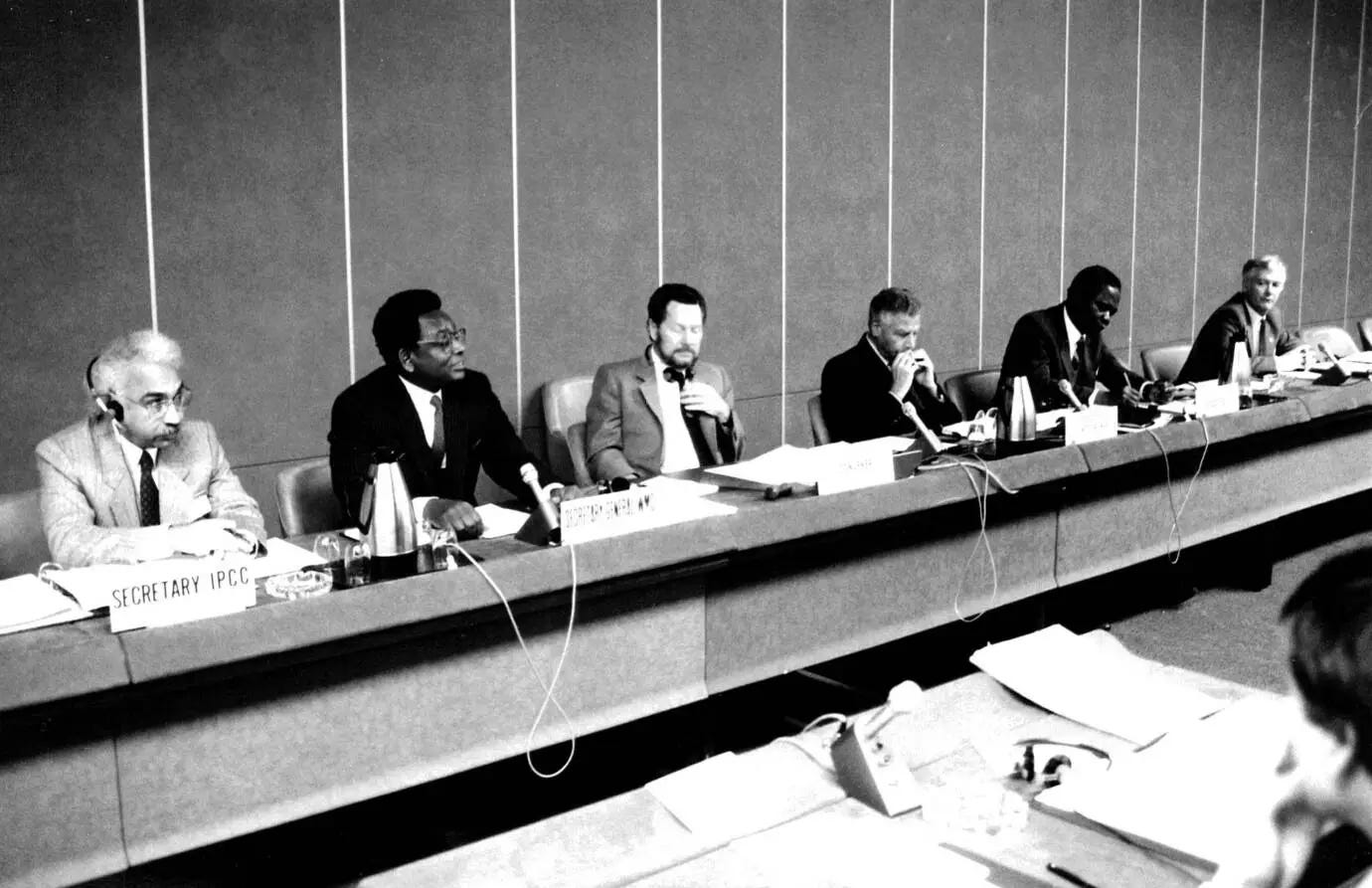
The IPCC met for the first time in Geneva on November 9, 1988. Behind the scenes, Jim Bruce and G.O.P. Obasi of the WMO had “cornered” Bolin at the Toronto Conference in June and persuaded him to take the chairmanship. The WMO wanted scientific credibility. UNEP wanted political legitimacy. The US wanted someone who would appear politically neutral. Bolin satisfied all three. He was a citizen of a non-aligned country. An internationally respected meteorologist. He was unanimously elected chair.
Following a proposal by Tolba, the Panel agreed on three Working Groups. Working Group I The Science was co-chaired by John Houghton (UK). Working Group II Impacts chaired by Yuri Izrael (USSR). Working Group III Response Strategies chaired by the United States.
The US chairmanship of WGIII was strategic. The US used this position “to demonstrate the efficacy of US domestic efforts and the absence of any urgency for further action.” Bolin immediately stressed a problem that would shadow the IPCC for decades:
“Right now, many countries, especially developing countries, simply don’t trust assessments in which their scientists and policymakers have not participated.”
Tolba, who had built the world’s most successful environmental treaty, had been outmaneuvered. The body he co-created would not be the swift, independent scientific engine he wanted. It would be something slower, more controllable and soon, something its designers had not predicted.
The Era That Shaped IPCC (1988–1992)
The IPCC was born at one of the most consequential geopolitical moments of the 20th century. To understand why it took the shape it did, we have to understand the unlikely man who put climate on a world leader’s agenda.
The Diplomat
Sir Crispin Tickell was a career British diplomat, born in 1930 into a family of intellectual distinction, the great-grandson of Thomas Henry Huxley, the biologist known as “Darwin’s bulldog” for vigorously defending the highly debated theory of evolution against all criticism. He joined the diplomatic service in 1954, served as British ambassador to the UN, and at one point held responsibility for the British Antarctic Territory the very place where the ozone hole was discovered decades later.
In 1977, long before climate was a widely discussed political issue, Tickell published Climatic Change and World Affairs. It argued that climate change was a serious threat to international stability. The book was ahead of its time. Almost nobody read it.
Then a prime minister sat next to him on a flight.
As The Ecologist reported, Tickell briefed Margaret Thatcher on climate during a flight, walking her through “the whole story of climate change, how it worked, the importance of greenhouse gases, and what the temperature of the planet would be without them.” Thatcher said: “Alright, let’s have a look into this.”
Thatcher had a degree in chemistry from Oxford. She was a Fellow of the Royal Society. She “very much felt herself to be a scientist among non-scientists.” She gave her first climate speech to the Royal Society in September 1988, then on November 8, 1989, walked to the podium of the UN General Assembly and delivered a 4,000-word speech entirely on the environment and climate change — the first major world leader to give a sustained, serious climate speech at that level.
“While the conventional, political dangers - the threat of global annihilation, the fact of regional war - appear to be receding, we have all recently become aware of another insidious danger,” Thatcher said. “It is the prospect of irretrievable damage to the atmosphere, to the oceans, to earth itself.”
She compared the implications to “the discovery of how to split the atom” and said the results “could be even more far-reaching.” She opened the Hadley Centre for Climate Prediction and Research in May 1990. She personally championed the IPCC.
The irony is thick. Thatcher, a free-market ideologue, became the climate messenger. And Tickell, the diplomat, the Huxley descendant, the man who had written a book nobody read, was the one who put it in front of her. Later, after she left office, she would partially retreat. But in 1988–1990, she was the political figure who made climate a world-leader-level issue.
The Ambivalent President
George H.W. Bush came into office in January 1989. His EPA Administrator, William Reilly, was a genuine environmentalist. His chief of staff, John Sununu, was a skeptic who actively worked to limit climate action. The White House was a battleground.
In November 1989, at the Noordwijk Ministerial Conference in the Netherlands, the US agreed in carefully hedged language, that “stabilization of CO₂ emissions should be achieved as soon as possible.” But the US refused to commit to specific targets or deadlines.
The Second World Climate Conference in Geneva (October - November 1990) was the pivotal moment. 137 states attended. The US, Japan, and Saudi Arabia formed one bloc opposing targets. The final declaration did not specify internationally agreed targets. Bolin addressed the conference and made a deep impression. As climate negotiator Bo Kjellén recalled, when Bolin presented the IPCC’s findings, “there was a silence in the room.”
On March 24, 1989, the tanker Exxon Valdez struck Bligh Reef in Alaska and spilled 11 million gallons of crude oil. The images - oil-soaked otters, blackened coastlines went around the world. It created a public mood: large industrial systems were reckless, corporations couldn’t be trusted, government had to step in. That mood was the backdrop against which climate policy emerged.
Mikhail Gorbachev came to power in 1985 and argued for “new political thinking.” Chernobyl in 1986 was a shock to the Soviet system. In his 1987 book Perestroika, he wrote:
“We are all passengers aboard one ship, the Earth, and we must not allow it to be wrecked. There will be no second Noah’s Ark.”
Gorbachev’s December 7, 1988, speech to the UN - where he announced unilateral troop reductions - also addressed the environment: “The environmental situation in a number of regions is simply appalling.” The Berlin Wall fell in November 1989. The Cold War’s ending mattered: the “peace dividend” freed attention and resources, and removed the excuse that you couldn’t deal with environmental problems when nuclear annihilation loomed.
West Germany was the country where the political soil was richest for environmentalism. The Green Party won 5.6% of the vote in March 1983 and sent 27 representatives to the Bundestag - the first genuinely ecological party in a major national parliament. Chernobyl in 1986 radicalized German environmentalism. By the late 1980s, their campaign posters read: “Everyone is talking about Germany; we’re talking about the weather!” - arguably the first party anywhere to make climate a national campaign theme.
Rio
The Earth Summit in Rio de Janeiro, June 1992, was the largest gathering of world leaders ever assembled - 179 countries, 108 heads of state. It was organized by Maurice Strong, the Canadian oilman who became the UN’s leading environmental diplomat.
The IPCC’s First Assessment Report, completed in 1990, had “played a decisive role in leading to the creation of the UNFCCC.” The result was the UN Framework Convention on Climate Change, opened for signature at Rio. 154 states signed. Its key provision: stabilization of greenhouse gas concentrations “at a level that will prevent dangerous anthropogenic interference with the climate system.” But it contained no binding emissions targets - a deliberate omission, and one the Global Climate Coalition would later brag about.
Tickell, the man who started it all by briefing a prime minister on a flight, watched from the margins. He died in 2022, aged 91. The book he wrote in 1977 - the one nobody read - is now recognized as a foundational text of climate diplomacy.
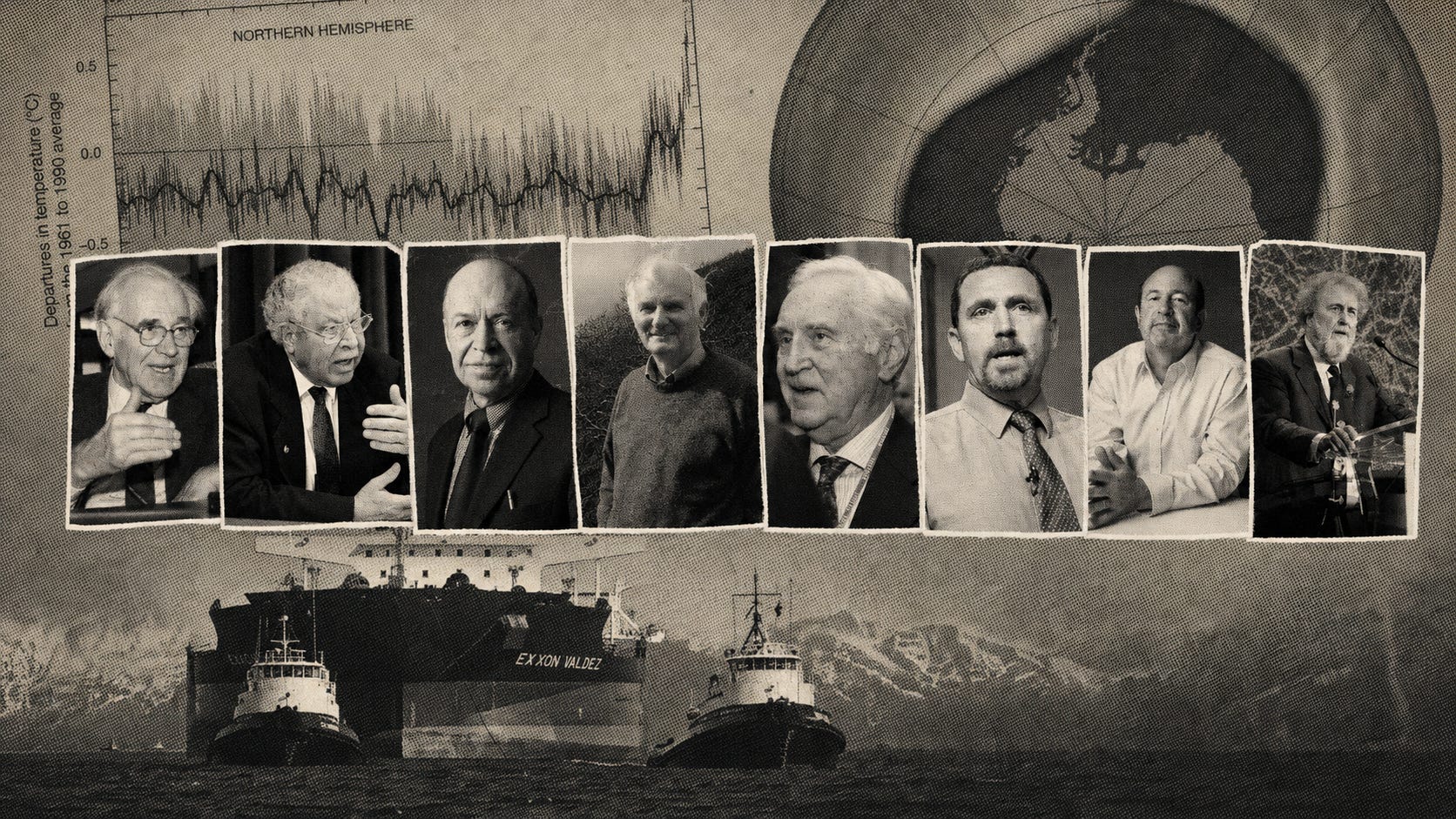
The Counter-Movement (1989–2002)
The countermovement was almost instantaneous.
The Global Climate Coalition was founded in June 1989, a year after Hansen’s testimony on climate change. Its members: Shell, Texaco, Amoco, ARCO, Phillips Petroleum, coal miners BHP-Utah and Peabody, utilities Southern Company and American Electric Power, the American Petroleum Institute, the National Coal Association, and the Edison Electric Institute. GM, Ford, and Chrysler joined. So did the US Chamber of Commerce and Dow Chemical.
The GCC’s three core arguments: the science was uncertain, action would cause economic harm, and developing countries had to act too - the “China excuse,” deployed as early as 1990. The GCC’s strategy was not to disprove the science but to manufacture doubt. As Spencer Weart documented (in 2011):
“It was not necessary to disprove the scientific consensus; it would suffice to raise enough questions to convince the public that there was no consensus.”
The Skeptics
The George C. Marshall Institute issued a report attacking the consensus in 1989, endorsed by Frederick Seitz, a respected physicist with no background in meteorology. The key figures: S. Fred Singer, who argued warming was an artifact of urbanization. Richard Lindzen of MIT, the one skeptic with a genuine atmospheric physics reputation. Patrick Michaels of the University of Virginia, who received $40,000 from Cyprus Minerals in 1989 and gave invited lectures to the Western Fuels Association.
As the Los Angeles Times reported in February 1990, the skeptics “number less than a dozen […] Most have not specialized in greenhouse research and have only recently entered the fray.”
But they were amplified - by Forbes, and by White House chief of staff John Sununu, who used their arguments to shape Bush Sr.’s inaction.
Censorship
In May 1989, Hansen testified again before Congress. The OMB had altered his written testimony to make warming “seem less serious and certain.” The New York Times reported it: “Scientist Says Budget Office Altered His Testimony.” Al Gore called it “a form of scientific fraud.” The White House said it was “routine.”
The GCC didn’t just work the outside. It worked the inside. The GCC maintained an “IPCC Tracker Fund” - roughly 30% of total committee expenditures in 1994-1996. In at least one IPCC technical paper, GCC language was “accepted almost in its entirety.” (DeSmog; Climate Investigations Center)
Internally, the GCC was more candid than it was publicly. By 1995, its internal documents acknowledged the legitimacy of anthropogenic climate change - even as it continued to publicly emphasize uncertainty.
The Santer Affair
The IPCC’s Second Assessment Report, in 1995, is where the panel crossed a threshold. And the man at the center of it was Benjamin Santer. Born in 1955 in Washington, DC, he did his PhD at the University of East Anglia’s Climatic Research Unit, the same CRU that would later be at the center of “Climategate.” He spent five years at the Max Planck Institute for Meteorology in Hamburg, then moved to Lawrence Livermore National Laboratory in California, where he has worked ever since.
He led Working Group I’s Chapter 8, “Detection of Climate Change and Attribution of Causes.” It contained the sentence that changed the debate:
Taken together, these results point towards a human influence on climate.
The first time the IPCC stated the human fingerprint had been detected. The language was careful - “point towards” - but it was a paradigm shift in understanding the actual cause of the phenomenon that actually became a crisis of planetary dimensions.
The backlash was immediate. In a June 1996 Wall Street Journal editorial, Frederick Seitz claimed alterations were made to “deceive policy makers and the public into believing that the scientific evidence shows human activities are causing global warming.” The GCC accused Santer of “scientific cleansing.”
Santer and 40 other scientists responded: all IPCC procedural rules were followed, changes were required by the review process, and both versions reached the same conclusion. Roughly 20 percent of Chapter 8 was devoted to discussing uncertainties. Bolin defended him: “The allegations are completely unjustified.” The controversy became a template for future attacks.
Santer kept doing the science. He kept publishing. He became one of the most respected climate scientists of his generation. But the attack on Chapter 8 established the pattern: find a sentence, strip it of context, accuse the author of bad faith, generate media controversy. It would be repeated for decades.
Doubt Is a Product

In 1969, a tobacco executive wrote an internal memo that was never meant to leave the building. It contained one of the most honest sentences in corporate history: “Doubt is our product.” Not cigarettes. Doubt.
The Hockey Stick
The Third Assessment Report, in 2001, is remembered for one image: the “hockey stick” graph. Michael Mann, Raymond Bradley, and Malcolm Hughes reconstructed Northern Hemisphere temperatures over 1,000 years - flat for 900, then a sharp upward turn. The IPCC placed it prominently in the Summary for Policymakers.
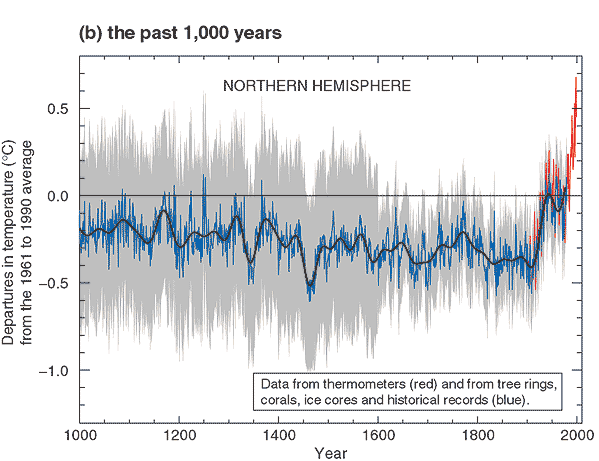
The graph became a target. Stephen McIntyre, a retired mining consultant, and Ross McKitrick claimed the shape was “primarily an artefact of poor data handling.” Scientists found the issues minor. The US National Research Council supported Mann’s findings with qualifications - “little effect on the result.”
Mann co-founded RealClimate in 2004. “From an intellectual point of view, these contrarians are pathetic, because there’s no scientific validity to their arguments whatsoever,” he said. “But they’re very skilled at deducing what sorts of disingenuous arguments and untruths are likely to be believable to the public that doesn’t know better.”
Kyoto and After
The Second Assessment Report provided the scientific basis for the Kyoto Protocol, adopted in 1997. The GCC’s crowning achievement was the Byrd-Hagel Resolution (July 1997), which passed the Senate 95-0 and effectively killed US ratification. When George W. Bush withdrew from Kyoto in 2001, White House talking points congratulated the GCC: “POTUS rejected Kyoto, in part, based on input from you.” The GCC disbanded in 2002. Mission accomplished.
That same year, an ExxonMobil lobbyist’s memo claimed IPCC chair Bob Watson was “handpicked by Al Gore” and should be replaced. On April 19, 2002, government representatives voted 76 to 49 for Rajendra Pachauri.
Santer, meanwhile, kept working. The template built to attack him in 1996 has never been retired. It has only been refined.
The Design That Endures
The IPCC carries a tension present at its creation. It is not a scientific body, and it is not a political body. It is a hybrid. This was deliberate. It has consequences to this day.
Myth 1: The IPCC was a liberal creation.
No. The IPCC’s intergovernmental design was pushed hardest by the Reagan administration, specifically the Department of Energy. The US wanted to control who could speak for the climate, when, and how.
Myth 2: The IPCC is purely scientific.
No. It never was. Its members are government nominees. Its reports require government approval. From the first session, there was a struggle between scientists and government representatives.
Myth 3: The intergovernmental design was a mistake.
Bolin saw it as a “brilliant move” that gave the panel political influence. Jean Ripert, chairman of the Intergovernmental Negotiating Committee, said “the intergovernmental nature of the IPCC was in large part responsible for educating many government bureaucrats about the problem.” Spencer Weart argues that by 2001, “the panel had turned its procedural restraints into a virtue: Whatever it did manage to say would have unimpeachable authority.”
Think about what would have happened without the intergovernmental design. If the IPCC had been a purely scientific body — an expert panel, answerable to no government — its reports would have been cleaner, faster, and more blunt. They would also have been easy to ignore. A government that didn't like the conclusions could have said: these are scientists, not elected officials. They don't speak for us. We didn't appoint them. We don't have to listen.
Now think about what the intergovernmental design actually did. Every government that participates in the IPCC appoints its own scientists. Every government reviews the drafts. Every government approves the Summary for Policymakers line by line. When the IPCC speaks, it speaks with the governments, not at them. That is why no government can dismiss the findings as the musings of unaccountable academics. They signed off. They were in the room.
So, both sides, the scientific and the governmental, were true simultaneously. The US got a mechanism it could try to control, and for a decade, it did, watering down targets, slowing the process, protecting its fossil fuel industry. The scientists got a mechanism governments had to own and when those governments finally owned it, the conclusions carried a weight no independent report could have matched.
The result was an institution that was by design slower, more conservative, more cautious than a purely scientific body would have been. It was also one whose conclusions governments could not walk away from.
Same Architecture, Different Controllers
The IPCC has now failed to agree on a publication timeline for its Seventh Assessment Report at five consecutive meetings - Lima, Hangzhou, Sofia, Istanbul, and Bangkok. It is unprecedented in the history of the IPCC.
Saudi Arabia, China, India, and Russia are blocking a 2028 timeline that would align with the UNFCCC’s global stocktake. India argues the IPCC shouldn’t be subservient to the UNFCCC. Russia says alignment would send a “negative signal.” France expressed “deep concern over attempts to arbitrarily slow down and postpone the publication schedule.” IPCC chair Jim Skea called the Bangkok meeting “frustrating and disappointing.”
The same intergovernmental architecture that Reagan’s White House designed for control in 1988 is now used by different powers for the same purpose: delay. The design hasn’t broken. It’s working exactly as designed.
Still Writing, Through the Noise
The science doesn’t stop because the politics does.
Bolin held the line in 1990. He presented the First Assessment Report to a room of 137 governments, and there was silence. He was too ill to accept the Nobel Prize in 2007 and sadly passed away only three weeks later. His final publication — an op-ed co-authored with Swedish Ambassador Bo Kjellén — appeared three days after his death. Its title: “Serious but not hopeless.”
Santer held the line in 1996. He and 40 scientists wrote to the Wall Street Journal and said: all the rules were followed. The science stands. He retired from Lawrence Livermore in 2021.
AR7 authors are still writing. Despite five meetings without a timeline. Despite the deadlock. Despite everything.
From “point towards” in 1995 to “unequivocal” in 2021 - 35 years of institutional evolution. The IPCC’s Sixth Assessment Report stated it is “unequivocal that human influence has warmed the atmosphere, ocean, and land.” The word replaced the cautious language of 1995. It represents three and a half decades of scientists doing the work, year after year, report after report, while the politics churned around them.
The atmosphere doesn't negotiate. But it does respond to evidence, and the evidence exists because people like these kept showing up. They built the instruments, ran the models, sat through the plenary sessions, absorbed the attacks, and did it again the next cycle. Not because anyone thanked them.
Because the data was there, and someone had to make it clear.